Precision
In dietary supplement research, precision refers to how reliably a study can detect a measurable effect within a specific, defined group of people, rather than in a broad, undifferentiated population.
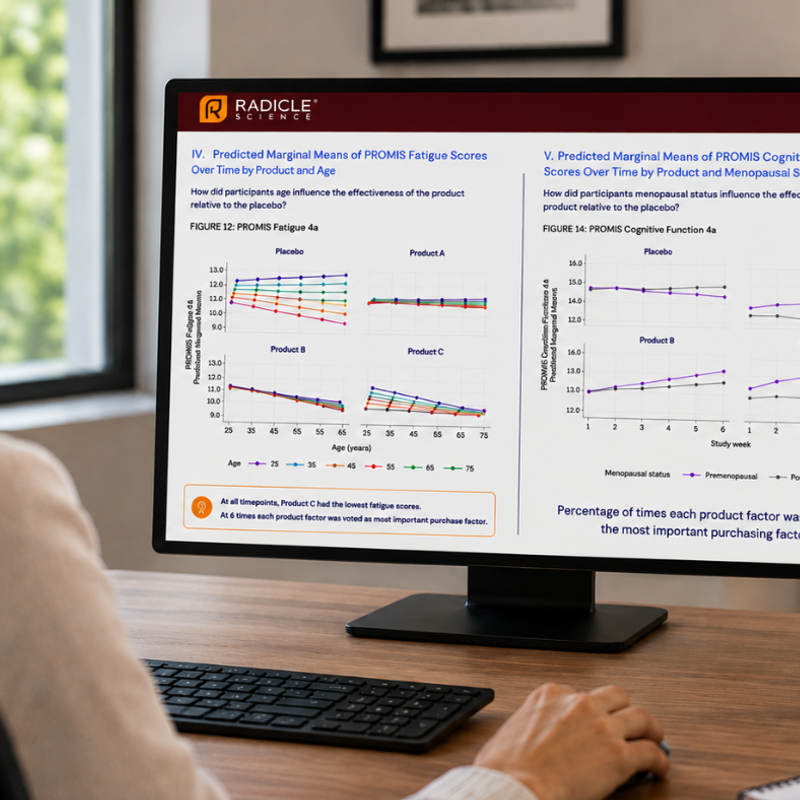
A supplement's effect often isn't uniform. It may be larger in people with a particular baseline characteristic (e.g., low baseline vitamin D status, higher body weight, older age, higher baseline stress) and smaller or absent in others. Precision is the degree to which a study can identify and support that kind of group-specific effect with statistical confidence, rather than just reporting an average effect across everyone enrolled.
Achieving precision requires several things: a sample large enough to detect an effect within the subgroup being examined (not just the study as a whole), subgroups defined before the data is analyzed rather than identified by searching the results afterward, consistent and validated outcome measures, and correction for the fact that testing many subgroups increases the chance of a false-positive finding.
This matters especially in supplement research, where studies are often smaller than pharmaceutical trials, effect sizes tend to be modest, and outcomes (mood, energy, sleep quality, digestion) are frequently self-reported rather than measured with a lab test. Under those conditions, a subgroup finding is more easily produced by chance. A precise result should be reported with its confidence interval and subgroup size, and ideally confirmed in an independent study, before it's treated as reliable.
Personalization
Personalization refers to matching a specific product, dose, or recommendation to an individual person. In supplements, this might mean a health care practitioner recommending an ingredient based on a person's reported symptoms, demographics, lab values, or survey responses.
Personalization is an applied, product-level decision. It can draw on clinical research, but it can also draw on non-clinical inputs — self-reported preferences, purchase history, or general nutritional guidelines, experience of a practitioner that were never tested in a controlled study.
How Precision and Personalization Differ in Supplement Research They Differ
Precision is a property of a study: it describes whether an effect within a defined group has been detected with adequate rigor. Personalization is an individual response or preference related to a product or recommendation: it describes how that information (or other information) gets applied to an individual.
A study cannot personalize anything on its own. At most, it can show that an effect differs across groups — that is precision. For a personalized supplement recommendation to be evidence-based rather than speculative, the precision behind it should be explicit: what subgroup was studied, how large it was, how the effect was measured, and whether the finding has been replicated independently. Personalization in wellness is at an all time high, yet until it is matched with precision the evidence gap persists.
Frequently Asked Questions:
1. What is precision in dietary supplement research?
Precision is how reliably a study can detect a measurable effect within a specific, defined group of people, rather than only reporting an average effect across a broad population. A precise finding is supported by adequate subgroup size, predefined subgroups, validated outcome measures, appropriate statistical corrections, and ideally independent replication.
2. What is personalization in dietary supplement research?
Personalization is the process of matching a specific supplement product, dose, or recommendation to an individual based on factors such as reported symptoms, demographics, lab values or survey responses.
3. What is the difference between precision and personalization in supplements?
Precision is a property of a study: it shows whether an effect has been reliably detected within a defined group. Personalization is an individual-level application: it uses research or other information to guide a product or recommendation for a specific person. In short, precision establishes group-specific evidence, while personalization applies information to an individual.
4. Why does precision in supplement research matter for wellness brands?
Supplement effects can vary between groups, and supplement studies are often relatively small, have modest effect sizes, and rely on self-reported outcomes. This makes subgroup findings more easily produced by chance. Precision helps establish whether an apparent group-specific benefit is statistically reliable, giving wellness brands stronger evidence for claims or recommendations aimed at particular groups.
5. What makes a personalized supplement recommendation evidence-based?
A personalized supplement recommendation is evidence-based when the precision behind it is explicit: the subgroup studied, the size of that group, how the effect was measured, and whether the finding has been replicated independently. Personalization without that precision is speculative, not clinical.