Supplement companies face mounting pressure to back up their product statements with solid scientific evidence. The Federal Trade Commission expects health-related claims to rest on rigorous data, and consumers increasingly demand proof before purchasing. This post examines how businesses can substantiate claims through systematic research, regulatory compliance, and transparent validation methods.
The process requires understanding regulatory frameworks, conducting credible clinical studies, and maintaining documentation that meets established standards. Companies that invest in proper substantiation protect themselves from enforcement actions while building lasting consumer trust.
Why It Is Critical to Substantiate Claims in the Supplement Industry
Most supplement manufacturers historically relied on testimonials and implied benefits because many lacked clinical trials specific to their product formulations. This created what industry experts call the "Proof Gap." It can be described as a disconnect between marketing statements and scientific validation.
The consequences of this gap extend beyond regulatory risk. Healthcare providers remain skeptical of natural products without clinical evidence, defaulting to pharmaceutical options for their patients. Insurance companies decline coverage for unproven supplements. Consumers question whether products deliver on their promises.
The FTC has issued nearly 700 notices of penalty offenses targeting unsubstantiated health claims and misuse of endorsements. The agency can proceed directly to legal action without warning letters, making proactive compliance essential.
Beyond avoiding penalties, substantiation creates competitive advantages. Randomized clinical trials provide scientific validation that differentiates products in crowded markets. Companies with robust evidence can make stronger claims, command premium pricing, and earn recommendations from healthcare professionals.
Essential Steps to Substantiate Claims
Building credible support for supplement claims requires systematic planning and execution. Companies must define their statements precisely, understand regulatory boundaries, conduct appropriate research, and document findings accurately.
Defining Product Claims and Their Scope
The FDA recognizes distinct categories of permissible claims for dietary supplements. Structure/function claims describe how a product affects normal body structure or function, such as "enhances muscle tone" or "strengthens your immune system." These statements require notification to the FDA within 30 days of first marketing the product and must include the mandatory disclaimer: "This statement has not been evaluated by the Food and Drug Administration. This product is not intended to diagnose, treat, cure, or prevent any disease."
Disease claims fall outside the scope of dietary supplements. These statements address a product's effect on a disease state and remain within the purview of pharmaceutical drugs due to the extensive clinical trials required for FDA approval. Disease claims should not appear on supplements, including implied ones from testimonials that mention specific diseases.
Many dietary supplement products cannot make strong structure/function claims because they lack formulation-specific trials. Ingredient-level evidence does not automatically transfer to finished products containing multiple components.
Understanding Regulatory Expectations
The FTC regulates dietary supplement marketing, while the FDA can take legal action against adulterated or misbranded products. Both agencies apply the standard of "competent and reliable scientific evidence," defined as tests, analyses, research, or studies conducted and evaluated objectively by qualified experts using procedures generally accepted in the profession to yield accurate and reliable results.
The FTC's Health Products Compliance Guidance emphasizes that substantiation of health-related benefits generally requires randomized, controlled human clinical testing. The agency evaluates several factors when assessing evidence quality: sample size, study duration, outcome measures, control groups, randomization, and blinding procedures.
Ingredient-level evidence may not suffice to substantiate claims on products containing ingredient combinations. The FTC expects that trial participants represent target customers. A product marketed toward women over 50 requires clinical data from that demographic.
The FTC monitors dietary supplement compliance regularly and may examine company websites to verify completeness of clinical study documentation. Companies must maintain substantiation before making claims, not after enforcement inquiries begin.
Designing and Conducting Credible Clinical Research
Randomized controlled trials represent the gold standard for substantiating supplement claims. These studies demonstrate statistically significant improvements compared to placebo and provide the scientific credibility that healthcare providers and consumers demand.
Credible clinical research requires several essential elements. Randomization reduces patient selection bias. Control groups provide comparison baselines against which interventions are evaluated. Blinding minimizes bias from participants and researchers. Proper statistical analysis ensures meaningful interpretation of results.
The quality of research matters more than quantity. A well-designed study with appropriate controls and sufficient statistical power carries more weight than multiple weak studies. Animal studies, in vitro research, epidemiological data, and anecdotal evidence generally do not meet the competent and reliable scientific evidence standard as standalone support.
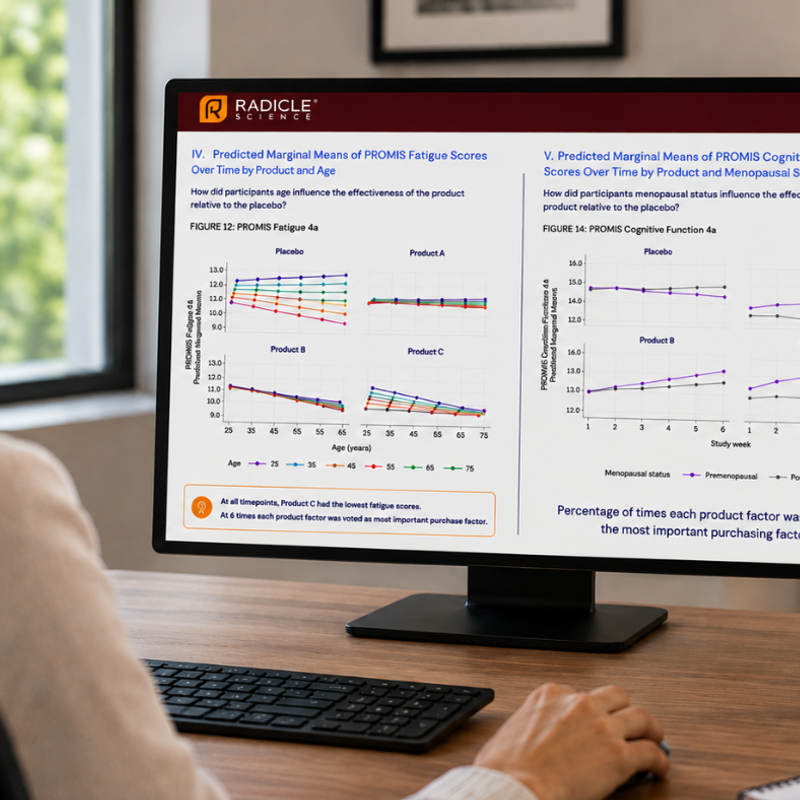
Validated surveys and patient-reported outcomes can support claims when used in rigorous randomized controlled studies. PROMIS tools, tested and validated in large diverse populations, offer scientifically sound methods for measuring health outcomes relevant to dietary supplements.
Modern clinical research platforms have reduced traditional barriers to conducting trials. Virtual trial infrastructure can deliver actionable results in under 180 days, making clinical validation accessible to companies that previously could not afford traditional research timelines and costs.
Interpreting and Documenting Research Outcomes
Research findings must be interpreted objectively and documented thoroughly. Statistical significance indicates whether observed effects exceed what chance alone would produce. Companies must report results accurately, including negative findings and study limitations.
The strength of substantiation varies by claim type. "Clinically proven" claims backed by high-quality randomized controlled trials present low regulatory risk. "Clinically proven ingredient" claims where only the ingredient has RCT support carry medium risk, as consumers may perceive the finished product as more robustly evaluated than it actually is. Structure/function claims without RCT support represent elevated risk.
Documentation must meet professional standards. Doctored white papers, anecdotal reports, data with broad generalizations, and creative liberties do not satisfy the competent and reliable scientific evidence requirement. Clinical trials conducted by qualified experts using accepted methodologies provide the documentation regulators expect.
Companies should make RCT data transparent and available on their websites or seek independent peer review and publication for additional credibility. Transparency demonstrates confidence in research quality and facilitates regulatory review.
Leveraging Third-Party Validation and Partnerships
Independent evaluation strengthens substantiation efforts. Supplements need clinical proof of their claims and independent testing to verify that every batch maintains purity and accurate dosing.
Third-party certification programs provide unbiased verification of product quality through routine testing of finished products, manufacturing facility inspections, and verification that products contain labeled ingredients at stated amounts. Major certification bodies include NSF International, which offers the only American National Standard for dietary supplement ingredients, and specialized programs that test for contaminants and banned substances.
Clinical research organizations offer expertise in study design, regulatory compliance, and data analysis. Partnerships with specialized platforms enable companies to conduct gold-standard clinical trials without building internal research infrastructure. These collaborations provide access to large participant pools, validated outcome measures, and established regulatory pathways.
External validation signals commitment to transparency and scientific rigor. Healthcare providers, retailers, and informed consumers recognize the value of independent verification over self-reported claims.
Maintaining Regulatory Compliance Over Time
Substantiation is not a one-time event. Companies must monitor evolving scientific literature, update documentation as new evidence emerges, and ensure claims remain supported by current scientific consensus.
The FTC's increased scrutiny of the dietary supplement industry requires ongoing vigilance. Companies receiving warning letters should conduct comprehensive reviews of their label claim approval processes. Even if a letter focuses on one claim, the underlying issue may be systemic, warranting thorough examination of all label claims, website content, and social media posts.
Regular audits help identify gaps before regulators do. Companies should evaluate documentation supporting each claim, assess whether trial participants match target demographics, and verify that research meets current standards. Where evidence falls short, brands must reassess marketing strategies and consider conducting additional research.
Industry-wide accountability strengthens the entire sector. Retailers can require brands to provide substantiation for marketing claims. Professional associations can establish best practices for evidence standards. Companies that hold themselves and partners accountable contribute to rebuilding trust in natural health products.
Elevating Consumer Confidence in Natural Health Products
Rigorous substantiation directly addresses the trust deficit that has plagued the supplement industry. Consumers increasingly prioritize clinically proven products, with research indicating willingness to pay premiums for supplements backed by robust scientific data.
Transparent communication about research findings, study limitations, and ongoing validation efforts demonstrates ethical responsibility. Regulations and disclaimers exist to protect consumers, not to be buried in fine print. Companies that lead with transparency earn trust from healthcare providers, insurance companies, and consumers.
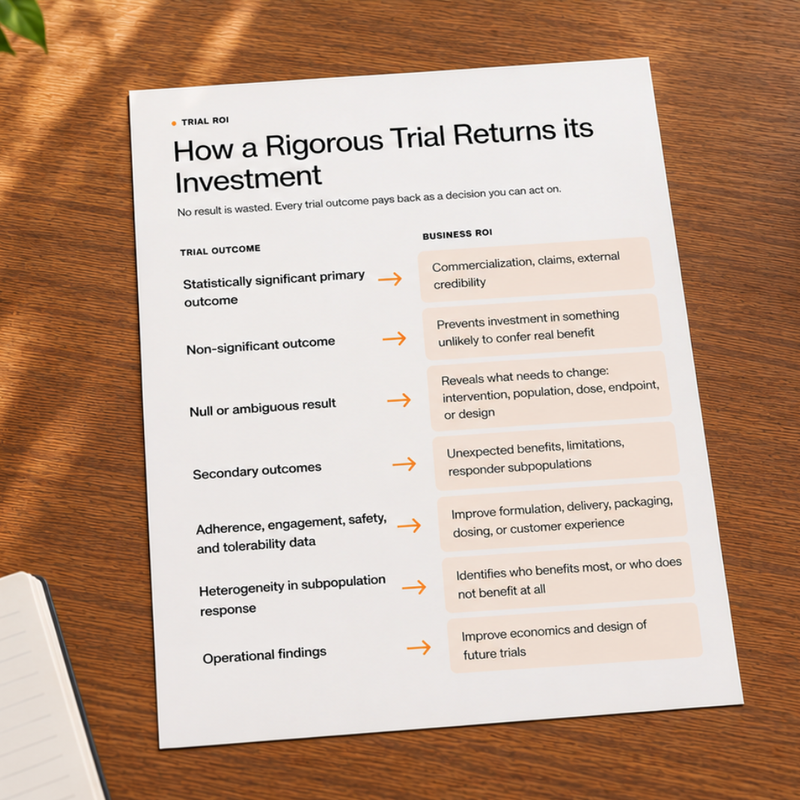
The commercial benefits of substantiation extend beyond regulatory compliance. Clinical trials enable compelling health claims, precision targeting of consumer segments most likely to benefit, and loyalty built on clinically proven results.
Companies committed to substantiating claims can access modern research infrastructure designed specifically for natural health products. Virtual trial platforms, validated outcome measures, and streamlined regulatory pathways make clinical validation feasible for businesses of all sizes.
The future of dietary supplements depends on closing the Proof Gap through systematic validation, transparent reporting, and ongoing research. Companies that invest in substantiation today position themselves as leaders in an industry moving toward evidence-based standards.
Frequently Asked Questions
What is the minimum evidence needed before making a supplement claim?
The FTC requires that substantiation of health-related benefits take the form of randomized, controlled human clinical testing. Where RCTs are not practical, the agency accepts high-quality epidemiological evidence if subject matter experts consider it acceptable. Companies must have substantiation in place before making claims, not after. The evidence must be conducted and evaluated objectively by qualified experts using procedures generally accepted in the profession.
What is the difference between structure/function claims and health benefit claims?
Structure/function claims describe how a product affects normal body structure or function, such as "enhances muscle tone" or "strengthens your immune system." These claims are permissible for dietary supplements with proper substantiation and required disclaimers. Health benefit claims that reference disease states are reserved for pharmaceutical drugs because they require extensive FDA approval processes. Supplements cannot make disease claims, including implied ones from testimonials mentioning specific diseases.
How often should companies update their research or documentation?
Companies must monitor compliance continuously, as the FTC regularly examines dietary supplement websites and marketing materials. When new scientific evidence emerges that affects claim substantiation, companies should update their documentation and reassess their marketing statements. Companies receiving warning letters should conduct comprehensive reviews of all label claims, website content, and social media posts. Regular audits help identify gaps before regulatory inquiries begin.
What role does consumer feedback play compared to clinical data?
Consumer testimonials and feedback do not meet the competent and reliable scientific evidence standard. The FTC has cited misuse of endorsements and testimonials in warning letters to supplement companies. While customer experiences provide valuable insights for product development, they cannot substitute for clinical trials when substantiating health claims. Randomized controlled trials represent the gold standard for FTC compliance and provide the objective data regulators require.
What are typical timelines for conducting scientifically valid trials?
Traditional clinical trials can take years and cost substantial sums, creating barriers for many supplement companies. Modern virtual trial platforms have reduced these timelines significantly. Some research infrastructure can generate meaningful health outcome data in a matter of months, with actionable results available in under 180 days while maintaining scientific rigor. The specific timeline depends on study design, participant recruitment, intervention duration, and outcome measures selected.